

 Open Access||Research Article
Exploring the Role of AI Tools in Enhancing Human Creativity in Arts and Music
College of Human Sciences, Department of Christian Spirituality, Church History and Missiology, University of South Africa (UNISA), Pretoria, 0003, South Africa
Abstract
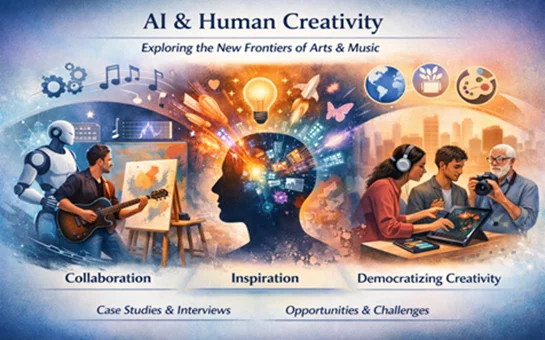
This study examines the intersection of Artificial Intelligence (AI) and human creativity, with particular attention to how AI tools support and expand artistic and musical processes. As AI continues to advance, it is increasingly woven into creative practices, offering new possibilities that enrich expression and composition. The study concentrates on three core dimensions: collaboration, inspiration, and the democratization of creativity. Through collaborative AI systems, Artists and Musicians can interact with machines in inventive ways, employing generative algorithms to spark ideas and venture into unexplored creative spaces. AI also functions as a wellspring of inspiration, introducing fresh concepts and methods that push conventional boundaries. Furthermore, the journal has highlighted AI's role in broadening access to creative tools, empowering individuals from diverse backgrounds to engage in artistic work regardless of technical expertise. Drawing on case studies and creator interviews, the journal explores both the opportunities and challenges of AI-driven creativity. Ultimately, it seeks to deepen understanding of how AI and human imagination can coexist, shaping a cooperative environment that enhances the diversity and depth of artistic expressions.
Keywords
Graphical Abstract
Novelty Statement
This study demonstrates how AI works with people to inspire creativity and make art and music accessible to everyone.
1. Introduction
Creativity, broadly defined as the creation of novel and valuable ideas, artefacts, or performances, remains a central human capacity. Spanning domains from science to the arts, it is highly prized. The ability to generate unique and significant ideas or artefacts has long been a hallmark of human cognition. Recent advances in generative AI have significantly expanded computational capabilities. AI can now produce text, images, and sound that often approach human-like quality. This reshapes how creative work is made, taught, and experienced. In arts and music, large-scale generative models now craft coherent multi-minute audio, stylistically nuanced compositions, and rich text prompts that guide ideation.[1] However, empirical results present a complex picture. Though AI can boost productivity and perceived quality in some contexts, it may also narrow the diversity of ideas and raise ethical and socio- technical issues.[1,2] This prompt crucial questions. Under what circumstances do AI tools enhance human creativity rather than merely automate it or restrict diversity?
What mechanisms support creative enhancement across disciplines? How can practitioners, educators, and researchers design human–AI workflows that nurture creative flourishing while mitigating harm? Often seen as a distinctly human trait, creativity has traditionally been linked to the ability to generate novel and valuable ideas. In recent years, AI advancements have introduced new methods for bolstering creativity, especially in artistic fields. Elgammal et al.[3] have shown that AI can aid the creative process by providing inspiration, enhancing artistic abilities, and even producing original works. This paper addresses these inquiries by synthesizing technical literature, human–AI co-creativity research, and psychological theories of creativity, and recent empirical studies on AI-supported creative tasks. It also examines how AI tools can enhance human creativity, assesses empirical evidence in arts and music, and proposes a framework for future tool design and evaluation.
1.2 Motivation for the study
Early breakthrough systems for music generation, like OpenAI's MuseNet and Jukebox and Google's MusicLM, demonstrated that deep neural networks could learn musical structures from extensive corpora. They produce harmoniously coherent compositions across instruments and genres.[4-6] These systems operationalize conditional generation, such as text to music, and hierarchical sequence modeling, allowing them to create multi-minute audio that maintains coherence across sections. Such capabilities were out of reach for simpler rule-based systems. These models have widened the technical possibilities available to composers and producers, enabling rapid prototyping and idea generation. Generative AI has emerged as a transformative force in the arts, facilitating new forms of creativity and artistic expression. Artists increasingly use AI- driven tools to create music, visual art, literature, and even performances. This technological integration enhances the creative process. It raises vital questions about authorship, originality, and the artist's role. For example, a recent study by Elgammal et al. shows how generative adversarial networks (GANs) can create paintings that rival traditional artworks, blurring the lines between human and machine creativity.[3]
In music, AI compositions are entering mainstream channels. Platforms like AIVA and Jukedeck are gaining traction within the music industry.[7] Moreover, the employment of generative AI has sparked debates over copyright laws and artistic integrity, as legal frameworks struggle to keep pace with technological advancements.[8] As generative AI continues to evolve, it will undoubtedly reshape our understanding of art and the creative process, challenging both artists and audiences to reconsider what it means to be creative in the digital age. This study is motivated by the rapid integration of AI tools into artistic and musical practices and the urgent need to understand their impact on human creativity. Presently, Artists and musicians increasingly adopt AI tools for inspiration, composition, and experimentation, it becomes essential to examine how these tools expand creative possibilities without diminishing human agency, originality, or cultural identity. The research seeks to explore how AI can serve as a collaborative partner-enhancing ideation, refining skills, and encouraging reflection—while addressing ethical concerns such as fairness, authorship, and diversity. Ultimately, the study aims to ensure that technological advancement supports meaningful, inclusive, and human-centred creative expression.
1.3 Significance of the study
This research stands out for its fresh take on AI, treating it not just as a tech gadget but as a creative buddy in the arts and music scene Unlike existing studies that focus primarily on technical efficiency or algorithmic performance, this research foregrounds the lived experiences of artists and musicians, examining how AI reshapes creative thinking, emotional expression, and cultural meaning-making. It introduces an integrative framework that connects collaboration, inspiration, and the democratization of creativity, offering a holistic perspective on AI-supported creativity across both arts and music. The study further distinguishes itself by combining conceptual analysis with qualitative evidence drawn from case studies and creator interviews, allowing for a deeper understanding of how AI tools influence creative agency, authorship, and identity. By addressing ethical concerns such as originality, bias, and inclusivity alongside creative benefits, the research moves beyond celebratory narratives to present a balanced and reflective account. Importantly, this work contributes a culturally sensitive lens, recognising how AI tools can amplify diverse voices and expand access to creative participation across different social and skill backgrounds. In doing so, the study advances current scholarship by reframing AI-driven creativity as a cooperative, ethical, and inclusive process that enriches, rather than replaces, human imagination.
Compared to existing surveys on AI and creativity, the article's novel contribution is not in topical coverage but in analytical framing and evidentiary integration. Most surveys already review AI tools in art and music, catalogue techniques (e.g., generative models, co-creation systems), or discuss ethical concerns at a high level. This research stands out in four clear ways
1. Triadic conceptual framework Rather than treating AI-Creativity isn't just about solo genius; it's all about teamwork, sparking ideas, and making sure everyone gets a say this moves beyond tool-centric taxonomies and offers a human-centered analytical lens that clarifies how AI intervenes in creative practice, not just where it is used.
2. Process-oriented focus: Existing studies usually focus on the results (like artworks or music pieces) or the tech stuff This article foregrounds creative processes-idea generation, exploration, and interaction-showing how AI reshapes artistic workflows and decision-making.
3. Empirical grounding through creators' perspectives: The article merges case studies with chats with artists and musicians to show that a lot of surveys don't have enough solid proof this idea talks about the real-life teamwork and spark of creativity in the artistic process
4. Democratization as a central analytical theme while access and inclusivity are mentioned in prior work, this study treats democratization as a core dimension, explicitly analyzing how AI lowers barriers to entry and alters cultural participation. In sum, the article's novelty lies less in reviewing technologies and more in reframing AI-driven creativity as a cooperative human–machine ecology, supported by qualitative empirical insights rather than purely technical synthesis.
2. Human–AI Co-creation and HCI perspectives
The field of HCI and music informatics underscores the importance of context in creative processes. For tools to be truly effective, they must align with the workflows and cognitive models of practitioners.[9] Research on human-AI collaboration suggests that AI excels more as a supportive player, producing raw material and tools that humans then refine and enhance, rather than replacing human judgment completely. Qualitative research shows that composers use AI-generated motifs as starting points for their creative journeys, tailoring suggestions to fit their unique styles, and depending on interactive interfaces for real-time control and understanding. Recent studies frame fruitful human-AI interactions as partnerships where both parties are creatively involved, not just replacements. Co-creativity focuses on interactive systems that suggest, respond to, and adapt around human input, crafting a dynamic loop where human intention and machine suggestions continuously improve the outcomes. Thorough reviews and recent discussions highlight interaction design, clarity of explanations, the precision of control, and meaningful evaluation metrics as central to effective co-creative systems.
2.1 Psychology of creativity
Psychologists examine creative performance as arising from processes like thinking broadly, associative retrieval, and drawing analogies. AI tools can step in at various stages: by creating broad idea sets, offering examples based on analogy, or enabling fast iterations and feedback. However, cognitive research also cautions that ideas from outside sources can anchor human creativity, potentially reducing diversity, as seen in studies where AI prompts boost perceived creativity but lower idea variety. The psychology of creativity delves into the mental faculties that enable people to come up with original ideas and effective solutions. Recent findings highlight that creativity is a learnable skill, not just an innate ability.[10]
Cognitive flexibility is emphasized as crucial for creative thinking, as it allows individuals to approach problems from different perspectives.[11] Personal characteristics, such as openness to experience, have been highlighted as significant predictors of one's creative potential.[12] The environment is also crucial; places that support and stimulate can boost creative work by encouraging exploration and collaboration.[13] Emerging research indicates that mindfulness practices, such as meditation, might enhance creative thinking by encouraging cognitive relaxation and openness.[14] In conclusion, understanding the psychological elements of creativity can shape educational practices and drive innovation forward.
3. AI's role in enhancing creativity
AI tools have the potential to boost human creativity by acting as partners, not substitutes. Using deep learning algorithms, AI can sift through vast datasets to detect patterns and inspire new forms of artistic expression. Take Google's Deep Dream, for example; it uses convolutional neural networks to transform images into dream-like creations, demonstrating how AI can push creative limits.[15] AI markedly enhances creativity across various fields by serving as a collaborative tool. For instance, systems like DALL-E and GPT-3 can craft original art and text, broadening creative horizons for artists and writers.[16] These tools analyze large sets of data to fuel new ideas and offer unique insights that human creators might overlook.
Furthermore, AI can handle routine tasks, giving creators more time to focus on conceptual development.[17] In music, AI algorithms like Jukedeck assist musicians in composing by generating melodies and harmonies tailored to specific styles.[18] Moreover, personalization through AI enables a deeper connection with audiences by curating content that resonates with individual preferences.[19] Ultimately, by augmenting human creativity, AI reshapes the creative landscape, fostering innovation and collaboration across artistic fields. The Collaborative Workflow Intelligence Framework (CWIF) identifies several critical interaction modes, as illustrated in Table 1.
Table 1: Key interaction patterns.
| Role Distribution | AI Responsibility | Human Responsibility |
|---|---|---|
| Information Flow | Process raw data | Validate quality |
| Decision Authority | Suggest alternatives | Make final decisions |
| Quality Control | Identify anomalies | Evaluate significance |
| Knowledge Integration | Extract patterns | Apply domain expertise |
| Implementation | Execute routine tasks | Oversee complex decisions |
3.1 AI in visual arts
In the world of visual arts, AI-powered platforms such as Artbreeder have become essential tools for artists, allowing them to blend various images and styles, thus fostering creativity and experimentation. These innovative tools enable rapid prototyping and iteration, helping artists delve into a wide array of aesthetic possibilities and pushing the boundaries of their creativity. Similarly, AI applications like DALL-E have mastered different styles, broadening the scope of what can be created and shaking up traditional ideas about authorship and originality. In addition, AI tools spark creativity through generative methods. Consider the collaboration between artist Refik Anadol and AI, which led to immersive data sculptures that transform public art experiences. This showcases how AI can be a wellspring of novel artistic expressions.
Artificial Intelligence (AI) is radically changing visual arts, ushering in new experiences and creative possibilities. Recent progress in machine learning and generative algorithms has led to the creation of AI tools that assist artists in crafting immersive digital artworks and interactive installations. For instance, AI can sift through massive datasets to create distinctive visual styles or even aid in composing music that harmonizes with visual pieces. Moreover, platforms like DeepArt and Runway ML offer artists opportunities to explore various aesthetics, merging age-old art techniques with contemporary tech. The increasing presence of AI in the virtual arts scene poses intriguing questions regarding authorship and creativity as the line between human and machine-generated art becomes increasingly blurred. In essence, AI is reshaping how we perceive artistic expression in the digital age, going beyond being a mere tool.
3.2 AI in music composition
Artificial Intelligence is making tremendous inroads into the realm of music composition and performance as well. AI-driven tools like OpenAI's MuseNet and AIVA are capable of composing original music across a variety of genres, serving as collaborative partners for musicians everywhere. These AI systems leverage machine learning algorithms trained on extensive musical datasets, enabling them to produce compositions rich with stylistic nuances and emotional depth. One striking example is AI's role in creating film scores, where composers draw on AI-generated themes, blending human intuition with algorithmic innovation. This fusion of human and machine illustrates AI's potential to broaden the creative toolkit available to musicians, enriching the overall musical landscape. AI is truly revolutionizing music composition, offering composers groundbreaking tools to elevate both creativity and efficiency.
Recent strides in machine learning have fostered the development of sophisticated algorithms capable of generating original musical pieces in various styles. For example, OpenAI's MuseNet composes music in the styles of well-known artists, seamlessly blending genres. Similarly, Google's Magenta project explores the intersection of machine learning and creativity, enabling composers to engage in a creative dialogue with AI.[3] AI not only aids in composition, but it also analyzes existing music to discover patterns and trends, helping composers better understand audience preferences. Additionally, AI tools like AIVA and Amper Music empower users to craft personalized soundtracks for a variety of contexts, ranging from film scores to video games, making music composition more accessible even to those without formal training.[20]
3.3 AI in creative practices and its implications
As AI evolves, it prompts important discussions about authorship and human creativity in music, challenging traditional understandings while offering fresh possibilities. The integration of AI into creative fields, such as visual arts, writing, and music composition, is profoundly transforming how creativity is approached today. As AI technologies grow more advanced, they not only enhance human creativity, but they also challenge traditional ideas about authorship and originality. For example, AI systems can produce art, music, and literature, leading artists to rethink the role of technology in creating art. Tools like DALL-E and GPT-4 have shown that they can create highly engaging visual and textual content, sparking discussions about the essence of creativity and the importance of the human touch in art.[21] Moreover, AI is opening up new ways for artists and machines to collaborate, resulting in hybrid creations that combine human intuition with the precision of machines.
This kind of partnership might make creative fields more accessible by providing tools to those without formal training, thereby expanding the range of voices in art and literature. Yet, these advancements come with ethical questions, such as copyright and ownership, as well as the potential commercialization of AI-generated art. As AI continues to progress, its impact on creative practices will spark ongoing debates about the future of artistry and expression.[22]
4. AI-driven creativity enhancement
4.1 Ideation: expanding the realm of possibility
Generative AI models can quickly create a variety of ideas, such as melodic snippets, chord progressions, visual themes, or narrative ideas, which artists can choose to modify and develop. For beginners, this reduces barriers to entry; for more experienced artists, it encourages creative exploration beyond familiar patterns. Research shows that using AI-generated ideas tends to boost productivity and the perceived quality of work, especially for those who are less experienced. In creative writing, AI prompts can enhance novelty and perceived usefulness for writers, despite a slight decrease in variety. The same principle applies to music: AI-generated motifs serve as raw material that composers can embrace, modify, or disregard.
4.2 Iteration and rapid prototyping
AI empowers creators to iterate rapidly, allowing composers to experiment with multiple continuations of a theme, change styles at will, or instantly listen to orchestration ideas. This capability bridges the gap between an idea and its audible form, encouraging creators to take bold creative risks and supporting the concept of "thinking through making." Systems equipped with control features, such as temperature, style weights, and prompt scaffolding, enable creators to blend machine-generated variation with their own intentions.
4.3 Extension & transformation
AI acts as an extension of a creator's skills, empowering non-specialists to undertake tasks that traditionally demanded training, such as automatic orchestration or timbre design. This democratization of creativity is both powerful and disputed. While it allows more individuals to create, the socio-technical landscape encompassing ownership, access, and training data biases influences who stands to gain. Systematic reviews indicate the promise of AI and the uneven distribution of benefits across populations. Generative models make musical instruments, orchestral textures, and production techniques accessible to creators without formal training. A songwriter, for example, can easily now prototype orchestrations, experiment with unique instrument combinations, or create high-quality stems previously requiring specialized studios. This expansion democratizes the production process and allows imaginative ideas to take precedence over technical limitations.
4.4 Reflection and critique
Advanced AI systems can offer valuable feedback for creators, like stylistic similarity scores or listener projections, which encourage reflection and revision. In studio settings, machine-generated critiques or alternative versions can reveal underlying expectations that spur refinement and innovation, thus transforming AI into a collaborative partner rather than a mere tool. However, the impact of such feedback hinges on how well it aligns with the creator's artistic vision.
4.5. Below are four suggested visuals/frameworks.
1. Overall framework: AI–human creative synergy model
Fig. 1 illustrates a human-centred creative process in which artistic intent initiates collaboration with AI tools. AI supports ideation by generating diverse possibilities, enables rapid iteration through prototyping and refinement, and enhances reflection via feedback and pattern recognition. These stages contribute to skill extension and innovation, ultimately leading to elevated human creative output. The framework emphasises AI as a collaborative partner that amplifies, rather than replaces, human creativity. AI acts as a catalyst at each stage of the human creative process: expanding imagination (Ideation), accelerating experimentation (Iteration), supporting meta-cognition (Reflection), and transferring or extending skills (Skill Extension).
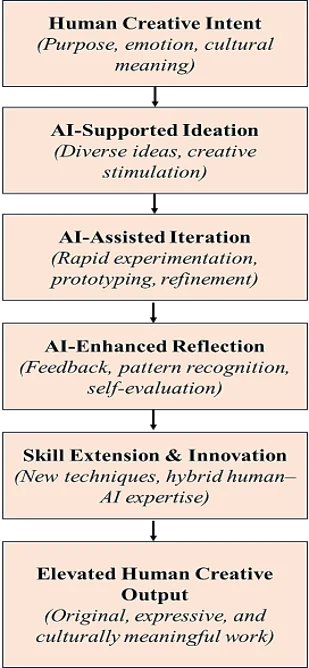
Fig. 1: Conceptual framework of AI-enhanced human creativity in arts and music.
2. Cycle Model: The AI–Creativity Iterative Loop Title'
Fig. 2 shows the circular diagram layout of iterative AI-human co-creation cycle. Circular arrows indicate continuous feedback, emphasising that creativity evolves through repeated human-AI interaction rather than a linear process. This shows the continuous and iterative nature of AI-human collaboration. AI does not replace creativity but amplifies each phase.
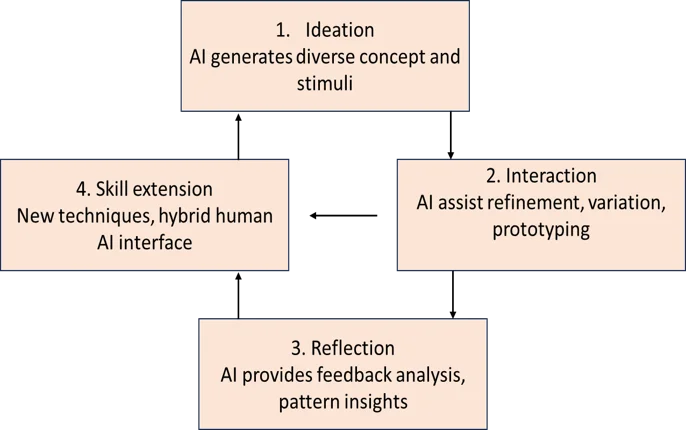
Fig. 2: Iterative AI–human co-creation cycle.
3. Layered framework: dimensions of ai-enhanced creativity
This can be shown as a four-layer bar or pyramid diagram where each layer builds upon the previous, as illustrated in Table 2.
Table 2: Four dimensions of AI-enhanced creativity.
| Dimension | Human Role | AI Function | Outcome |
|---|---|---|---|
| Ideation | Concept generation | Produces diverse, novel inputs | Expanded creative horizon |
| Iteration | Refinement and testing | Rapid prototyping and variation generation | Improved quality and innovation speed |
| Reflection | Evaluation and insight | Analytics, pattern recognition, feedback loops | Informed creative decisions |
| Skill Extension | Learning and adapting | Tutoring, tool augmentation, style transfer | Skill amplification and hybrid creativity |
4. Ecosystem framework: Human–AI co-creative ecosystem
This framework emphasizes that AI and humans coexist symbiotically-AI enhances efficiency and exploration, while human intuition and emotional intelligence anchor meaning and originality. Fig. 3 illustrates the layered ecosystem through which AI and human creativity interact in arts and music. AI capabilities, including data-driven algorithms and machine learning, provide generative and analytical support. The human creative core contributes emotion, cultural context, aesthetic judgment, and intentional meaning. Through their interaction, a co-creative process emerges, encompassing ideation, iteration, reflection, and skill extension, leading to creative innovation. The model emphasises balance, collaboration, and human-centred creativity.
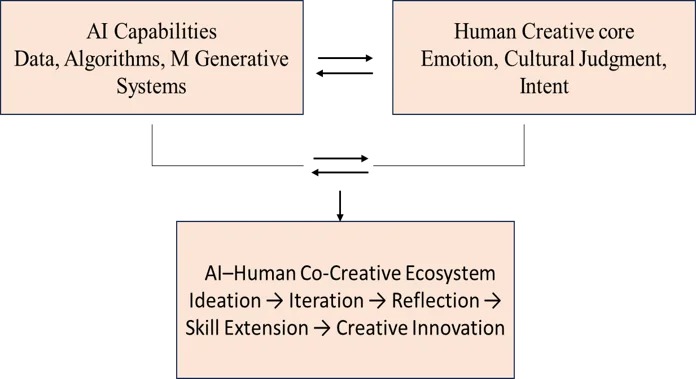
Fig. 3: Ecosystem of human–AI Co-creativity.
5. Evidence from Arts and Music: representative findings
5.1 Productivity and Value
Large-scale studies in visual arts show that artists using text-to-image tools experience increased productivity, which is reflected in higher engagement metrics on online platforms. However, the novelty and promotional effects of platforms can complicate any causal claims about these increases. In music, tools like MusicLM generate high-quality outputs that composers can integrate into prototypes, thus speeding up the creative process.
5.2 Creativity quality and diversity trade-offs
Experimental studies show that AI can boost the perceived creativity, usefulness, and enjoyment of produced works, such as stories or musical sketches, especially for creators with less initial creative confidence. At the same time, relying heavily on AI prompts may limit idea diversity and result in homogenized outputs. This tendency reflects model biases, making it a recurring issue for tool designers to consider.
5.3 Perception and valuation of AI-assisted works.
Audience studies reveal mixed responses: in some cases, AI-assisted works seem indistinguishable from those created solely by humans, while in other scenarios, knowing a work's human origin can actually boost its perceived value. These variations depend on domain-specific norms, like those of fine art compared to popular music, the transparency regarding AI's Role, and the cultural narratives around what is considered genuine. Systematic reviews suggest that how we value these works is heavily influenced by context and how they are presented.
6. Design principles for AI tools that genuinely enhance Creativity
Drawing from both literature synthesis and empirical data, the paper suggests actionable design principles for AI tools that genuinely enhance Creativity.
6.1 Support controllable exploration
Offer interfaces with adjustable creativity controls, like randomness levels or stylistic constraints, which allow users to balance novelty and coherence. Systems such as MusicLM highlight the importance of mechanisms that respect user intent.
6.2 Preserve and increase diversity
Focus on enhancing diversity by incorporating mechanisms that encourage oppositional sampling, multi-objective generation, or ensemble recommendations. It's been observed that over-reliance on a single AI model can lead to reduced diversity, suggesting the need for corrective tools. Make sure to provide clear indicators of how outputs were generated, such as details on training data and applied transformations.
6.3 Transparent provenance and explainability
This transparency builds trust and helps creators make informed decisions about using these creations.
6.4 Embedded learning and skill scaffolding
Include educational modules to explain why certain suggestions are made by the tool. For instance, understanding the harmonic analysis of a generated sequence can help users grasp underlying patterns, enhancing their skills and ensuring AI complements human learning rather than substitutes it.
6.5 Ethical, legal, and cultural safeguards
Incorporate safeguards for rights management, bias checks, and culturally sensitive defaults. Past examples of music systems that closely imitate artists highlight the legal and ethical risks of unchecked generation. Designers should consider options for revenue sharing and transparency in dataset usage.
7. Practical Advice for Artists, Educators, and Institutions
7.1 For Artist
Artists can use AI to quickly prototype ideas and overcome creative hurdles, but they should critically evaluate and curate the outcomes. View AI as a collaborative partner: engage with its suggestions, and incorporate human edits that express personal style. Continue practicing to develop and maintain essential technical abilities.
7.2 For Educators
Educators should integrate AI tools into lessons to assist with composing and critiquing, while promoting reflective examination of AI-generated materials. Teach students about model biases, sampling methods, and related legal and ethical issues. Encourage projects that involve both AI-assisted drafts and fully human creations to support comprehensive skill development.
7.3 For institutions & platforms
Institutions and platforms should prioritize transparent documentation of datasets and establish licensing frameworks. Support research aiming to develop algorithms that preserve diversity and assessment metrics that prioritize novelty and cultural diversity. Establish governance structures that involve artists, ethicists, and technologists in making decisions regarding AI tool deployment.
8. Evaluation: measuring creativity gains with AI
Evaluating the influence of AI on creativity is a complex task because creativity itself comes in many shapes and sizes and largely depends on the context. Experts advocate for utilizing a blend of methods when assessing creativity gains:
- Objective metrics include gauges for variety and divergence, scoring novelty against existing works, and analyzing productivity by counting iterations and ideas.
- Subjective assessments involve expert judges appraising the novelty and value of creative outputs, alongside self-reported measures such as creative confidence and flow states.
- Ecological indicators focus on whether AI-driven creations are performed, published, or embraced by audiences, serving as a real-world reflection of creative value.
- Experimental designs need to consider existing skill levels, as research shows AI assistance tends to benefit beginners more. Thus, detailed analyses stratified by skill are crucial.
9. Conclusion
AI technologies offer immense potential to boost human creativity, particularly in arts and music. These tools help generate ideas, enable rapid iteration, expand skillsets, and encourage reflection. However, to truly harness these positive effects, it's essential to address trade-offs involving diversity, interpretability, and fairness. Long-term and multifaceted research is necessary to evaluate both immediate and lasting creative development effects. To realize these advantages, thoughtful design must preserve human decision-making, support diversity, and address potential ethical, legal, and cultural challenges. The best outcome is in designing tools that work alongside humans, enhancing imagination without overshadowing creators' rights and cultural diversity. We need ongoing interdisciplinary research, engagement with artists in design processes, and well-thought-out policies to ensure AI truly stimulates creative advancement. As the relationship between technology and creativity develops, it's crucial for artists to welcome AI, while also considering its effects on originality, authorship, and artistic futures. This study concludes with a call to action: to unite technologists, artists, social scientists, and policymakers in crafting AI systems that truly elevate human creativity in an ethical, inclusive, and culturally aware manner.
Funding Declaration
This research did not receive any specific grant from funding agencies in the public, commercial, or not-for-profit sectors.
Data Availability Statement
The datasets generated and/or analyzed during the current study that support the findings are available from the corresponding author upon reasonable request.
Conflict of Interest
There is no conflict of interest.
Artificial Intelligence (AI) Use Disclosure
The authors declare that artificial intelligence (AI)-assisted tools were used only for language refinement, grammar improvement, and manuscript structuring purposes during the preparation of this work. All technical content, experimental implementation, results, and interpretations were independently developed and verified by the authors.
Supporting Information
Not applicable
References
- [1] E. Zhou, D. Lee, Generative artificial intelligence, human creativity, and art, PNAS Nexus, 2024, 3, 052, doi: 10.1093/pnasnexus/pgae052.
- [2] A. R. Doshi, O. P. Hauser, Generative AI enhances individual creativity but reduces the collective diversity of novel content, Science Advances, 2024, 10, eadn5290, doi: 10.1126/sciadv.adn5290.
- [3] A. Elgammal, B. Liu, M. Elhoseiny, M. Mazzone, CAN: Creative Adversarial Networks, Generating "Art" by Learning About Styles and Deviating from Style Norms, doi: 10.48550/arXiv.1706.07068.
- [4] OpenAI, MuseNet, 2019, https://openai.com/index/musenet/, Accessed 1 October 2025.
- [5] Jukebox (OpenAI), Jukebox: A neural net that generates music, https://openai.com/index/jukebox/, 2020, Accessed 1 October 2025.
- [6] A. Agostinelli, T. I. Denk, Z. Borsos, J. Engel, M. Verzetti, A. Caillon, Q. Huang, A. Jansen, A. Roberts, M. Tagliasacchi, M. Sharifi, N. Zeghidour, C. Frank, MusicLM: generating music from text, 2023, doi: 10.48550/arXiv.2301.11325.
- [7] O. Kruse, The Revolution of Generative AI Music: Opportunities and Challenges, https://www.music-hub.com/en-blog/the-revolution-of-generative-ai-music-opportunities-and-challenges, 13 August 2024.
- [8] W. Rasenberger, Copyright and Creativity in the Age of AI, 2024, available at https://www.theregreview.org/2024/01/23/rasenberger-copyright-and-creativity-in-the-age-of-ai/.
- [9] E. T. Gianet, L. D. Caro, A. Rapp, Human-AI collaboration insights from music composition, GenAICHI: CHI 2024 Workshop on Generative AI and HCI, CHI / Institutional Repository, 2024, https://dl.acm.org/doi/fullHtml/10.1145/3613905.3636294.
- [10] M. A. Runco, G. J. Jaeger, The standard definition of creativity, Creativity Research Journal, 2012, 24, 92–96, doi: 10.1080/10400419.2012.650092.
- [11] O. Vartanian, Neuroscience of creativity, In J. C. Kaufman & R. J. Sternberg (Eds.), The Cambridge handbook of creativity, 2nd ed., Cambridge University Press, 2019, 148–172, doi: 10.1017/9781316979839.010.
- [12] G. F. Burch, J. J. Burch, J. H. Batchelor, Group creative problem solving: the role of creative personality, Process and Creative Ability, 2019, 23, doi: 10.12776/qip.v23i3.1286.
- [13] M. Awawdeh, L. H. Lian, The relationship of creativity domains with personality traits and academic environment in higher education, Global Journal of Human-Social Science: G Linguistics & Education, 2022, 22, 67-73, https://socialscienceresearch.org/index.php/GJHSS/article/view/4048.
- [14] Y. Yuan, B. A. Nijstad, Whose ideas get selected? intra-team visibility, idea selection, and team creativity, 2025, 2025, doi: 10.5465/AMPROC.2025.239bp.
- [15] G. McCaig, S. DiPaola, L. Gabora, Deep convolutional networks as models of generalization and blending within visual creativity, 2016, arXiv preprint, doi: 10.48550/arXiv.1610.02478.
- [16] OpenAI, DALL-E: Creating images from text, 2021, https://openai.com/index/dall-e/, Accessed 4 October 2025.
- [17] M. A. Boden, Creativity and Art: Three Roads to Surprise, Oxford University Press, 2010.
- [18] Jukedeck, 2017, Automated music composition with AI, https://www.blu-digital.co.uk/blog/jukedeck, Accessed 12 October 2025.
- [19] R. Davies, R. Siddique, F. McEvoy, H. Cantekin, J. Hellings, AI and the creative industries, London School of Economics, Growth Lab, 2025, available at: https://www.economicsobservatory.com/wp-content/uploads/2025/12/AI_Creative_Industries.pdf, Accessed 13 October 2025.
- [20] F. Solomon, The influence of artificial intelligence on music composition and performance: opportunities, challenges, and ethical considerations, 2025, doi: 10.5281/zenodo.15295637.
- [21] Z. Ivcevic, M. Grandinetti, Artificial intelligence as a tool for creativity, Journal of Creativity, 2024, 34, 100079, doi: 10.1016/j.yjoc.2024.100079.
- [22] O. Hurmuzlu, Ethical Implications of the Commercialization of Artificial Intelligence (AI). In: Al Mubarak, M., Hamdan, A. (eds) Innovative and Intelligent Digital Technologies; Towards an Increased Efficiency. Studies in Systems, Decision and Control, Springer, Cham., 2024, 564, doi: 10.1007/978-3-031-70399-7_23.
Publisher Note
The views, statements, and data in all publications solely belong to the authors and contributors. GR Scholastic is not responsible for any injury resulting from the ideas, methods, or products mentioned. GR Scholastic remains neutral regarding jurisdictional claims in published maps and institutional affiliations.
Open Access
This article is licensed under a Creative Commons Attribution-NonCommercial 4.0 International License, which permits the non-commercial use, sharing, adaptation, distribution and reproduction in any medium or format, as long as appropriate credit to the original author(s) and the source is given by providing a link to the Creative Commons License and changes need to be indicated if there are any. The images or other third-party material in this article are included in the article's Creative Commons License, unless indicated otherwise in a credit line to the material. If material is not included in the article's Creative Commons License and your intended use is not permitted by statutory regulation or exceeds the permitted use, you will need to obtain permission directly from the copyright holder. To view a copy of this License, visit: https://creativecommons.org/licenses/by-nc/4.0/
© The Author(s) 2025