

 Open Access

Abstract
LactoVerus is a next-generation intelligent system designed to ensure the authenticity and traceability of dairy products using the integration of Blockchain and Internet of Things (IoT) technologies. The system addresses critical challenges in the dairy supply chain, including adulteration, lack of transparency, and limited consumer trust. IoT-based sensors are utilized to monitor key quality parameters such as pH, total dissolved solids (TDS), and turbidity in real time, enabling automated and accurate quality assessment. The collected data is securely stored in a cloud database, while cryptographic hashes are recorded on a blockchain ledger to ensure immutability and prevent data tampering. Each product batch is associated with a unique QR code, allowing consumers to instantly verify product authenticity and quality through a mobile application. Experimental evaluation demonstrates reliable sensor performance, successful data transmission, secure blockchain integration, and accurate identification of milk quality conditions, including fresh, adulterated, and spoiled samples. The system effectively distinguishes between normal and contaminated milk based on measured parameters, enhancing transparency and trust across the supply chain. LactoVerus provides a scalable, cost-effective, and user-centric solution for modern dairy quality assurance and traceability in both organized and unorganized sectors.
Keywords
Graphical Abstract
Novelty Statement
This proposed system integrates IoT-based real-time milk quality sensing with blockchain-secured traceability and QR-based consumer verification across dairy supply chains.
1. Introduction
Dairy products such as milk, curd, paneer, yogurt, and ghee are essential components of daily nutrition, yet issues of adulteration, poor quality control, and lack of transparency continue to affect consumer trust.[1,2] The increasing demand for natural and safe food has led to the exploration of advanced technologies to ensure authenticity and traceability throughout the supply chain. Recent advancements in the Internet of Things (IoT) and blockchain have shown considerable potential in addressing these challenges.[3] IoT enables real time monitoring of product quality parameters such as pH, temperature, and fat content, while Blockchain ensures secure, tamper proof recording of supply chain data.[4,5] When integrated, these technologies can build transparent and trustworthy ecosystems for food safety and certification.[6] This study provides a comprehensive survey of existing blockchain- and IoT-based approaches for food and dairy quality verification. Traditional dairy quality assessment still relies heavily on laboratory-based testing for parameters such as fat content, solids-not-fat (SNF), pH value, and microbial load. While laboratory methods provide accuracy, they are slow, expensive and often inaccessible to small producers or local vendors.[7] The delay between sampling and result generation creates opportunities for spoilage or deliberate tampering before the product reaches consumers. Furthermore, manual data entry and centralized record keeping systems are prone to manipulation, loss, or forgery, leading to a lack of consumer trust in product authenticity.[8] For local or unorganized dairy vendors, the challenges are even greater. Many of these vendors operate without access to testing laboratories or digital certification mechanisms. As a result, consumers purchasing loose milk or unpackaged dairy products rely solely on vendor credibility, with no objective way to verify the product’s purity. This gap in verification systems underscores the urgent need for automated, affordable, and decentralized quality assessment tools that can operate seamlessly across both organized and unorganized sectors of the dairy ecosystem.[9] Dairy adulteration not only results in economic loss but also poses serious health hazards.[10] Common adulterants such as detergent, urea, starch, or synthetic milk can cause gastrointestinal disorders, kidney damage and other toxic effects.[11] Several studies and reports across various economies and nations have highlighted that a significant proportion of tested samples fail to meet established purity and quality standards due to adulteration.[12] The lack of milk traceability mechanisms allows adulterated milk to enter the supply chain, and tracing its origin becomes extremely difficult. Moreover, antibiotic resistance in milk has emerged as a growing concern due to the excessive use of antibiotics in dairy cattle.[13] Inadequate withdrawal periods and improper antibiotic administration can lead to the persistence of antibiotic residues in milk, which, upon prolonged consumption, may contribute to the development of antimicrobial resistance in humans. Such contamination issues further highlight the weaknesses of existing quality monitoring mechanisms and the widespread lack of regulated real-time, end-to-end quality control systems supported by emerging digital technologies. The proposed system is designed to incorporate the applicable quality and safety criteria. The primary objectives of this study are to analyze and present existing dairy verification frameworks and real-time quality monitoring systems, with a focus on advancements integrating Internet of Things (IoT), Blockchain, Artificial Intelligence (AI), and traceability networks. The study aims to provide a comparative evaluation of recent digital dairy quality frameworks to understand their effectiveness in ensuring product authenticity and safety. Furthermore, it seeks to identify key research gaps related to scalability, security, interoperability, and data analytics within current systems. Based on these insights, the paper proposes future directions for developing robust, secure, scalable, and cost-effective dairy authentication solutions capable of real-time implementation across both organized and unorganized sectors of the dairy supply chain.
2. Literature review
2.1 Application of non-linear fingerprint numerical finger printing in dairy product quality inspection
Tingting Qu proposed a Non-Linear Fingerprint Mathematical Model for dairy product quality inspection using oscillation fingerprint technology.[14] The study developed nonlinear fingerprint libraries and mathematical models to distinguish between authentic, adulterated, and different branded dairy products. By analyzing system similarity values and response surface experimental parameters, the proposed method demonstrated improved accuracy and sensitivity in detecting dairy adulteration and quality deviations. The research highlights the potential of nonlinear fingerprint technology as a reliable, scalable, and cost-effective approach for dairy product safety and quality control.
2.2 Lock-in Amplifier (LIA)-based sensor for the of ciprofloxacin
Devasagayam et al. focuses on the development of a Lock-in Amplifier (LIA)-based dairy sensing system for the detection of ciprofloxacin residues in milk, which can pose serious health risks and regulatory concerns when present above permissible limits.[15] Conventional detection techniques such as chromatography and spectroscopy are often expensive, time-consuming, and unsuitable for rapid on-site analysis. To address these limitations, the proposed system integrates fluorescence spectroscopy with lock-in amplification to improve detection sensitivity and noise immunity. The Lock-in Amplifier operates by extracting weak fluorescence signals buried in background noise through phase-sensitive detection synchronized with a reference frequency. This significantly enhances the signal-to-noise ratio (SNR), enabling the accurate detection of very low concentrations of ciprofloxacin in milk samples. The system detects variations in the fluorescence characteristics of milk caused by the presence of antibiotic residues and processes these weak optical signals to obtain precise quantitative measurements.
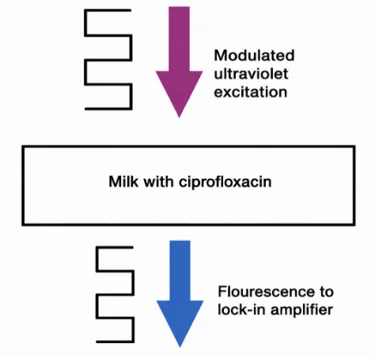
Fig. 1: A dairy sensor for detection of ciprofloxacin in milk samples.[15]
Experimental results demonstrate that the LIA-based sensing system provides high sensitivity, stable response, and reliable performance under varying sample conditions. The study reports a substantial improvement in the limit of detection compared with conventional fluorescence-based systems, achieving detection levels below the regulatory maximum residue limit for ciprofloxacin in milk. Furthermore, the sensor offers rapid analysis capability and potential portability, making it suitable for future on-farm and real-time dairy monitoring applications without dependence on large laboratory infrastructure. Fig. 1 shows a dairy sensor for detection of ciprofloxacin in milk samples. Overall, the study demonstrates that Lock-in Amplifier-based fluorescence sensing technology provides a cost-effective, precise, and portable approach for antibiotic residue detection in dairy products. The proposed method represents an important advancement toward automated and intelligent dairy quality inspection systems, supporting food safety regulations and public health protection.
2.3 Development of spectroscopic sensor system for an IOT application of adulteration identification on milk using machine learning
Sowmya and Ponnusamy focuses on the design and development of an IoT-enabled multispectral sensor system integrated with machine learning algorithms for rapid and real-time detection of milk adulteration.[16] The research addresses the limitations of traditional chemical testing methods, which are often time-consuming, expensive, laboratory-dependent, and unsuitable for field-level applications. The developed system integrates affordable multispectral sensors covering wavelengths from 410 nm to 940 nm with an Arduino-based microcontroller to capture optical spectral responses from milk samples. Various adulterants such as sodium salicylate, dextrose, hydrogen peroxide, and ammonium sulphate were tested to generate a spectral fingerprint dataset. The collected spectral data were analyzed using machine learning algorithms including Naive Bayes, Support Vector Machine (SVM), Decision Tree, Linear Discriminant Analysis (LDA), and Neural Network models for adulteration classification. The system provides a non-destructive and cost-effective solution for milk quality monitoring through an IoT-enabled cloud platform, allowing remote monitoring and real-time visualization of results through a web interface. This integration improves transparency, portability, and digital traceability for dairy producers and regulatory authorities without requiring advanced laboratory infrastructure. The developed prototype is portable and economically feasible, with an approximate system cost of INR 8,624, making it suitable for rural and small-scale dairy environments. Overall, the study demonstrates that IoT-integrated spectroscopic sensing combined with artificial intelligence can provide an intelligent, real-time, and reliable solution for milk adulteration detection and food safety management.
2.4 IoT integrated fuzzy classification analysis for detecting adulterants in cow milk
Lal et al. presents an IoT-enabled multispectral sensor system for rapid milk adulteration detection.[17] The system uses AS7265X spectral sensors and an Arduino microcontroller to collect milk spectral data across wavelengths from 410 nm to 940 nm. Four adulterants—sodium salicylate, dextrose, hydrogen peroxide, and ammonium sulphate—were analyzed using machine learning techniques. Algorithms such as Naive Bayes, SVM, Decision Tree, LDA, and Neural Networks were applied for classification. The neural network achieved up to 100% accuracy after hyperparameter tuning using a genetic algorithm. The proposed system is non-destructive, portable, and cost-effective, with a total cost of about INR 8,624. IoT integration enables real-time monitoring and remote visualization of adulteration results through a web interface. The study demonstrates that multispectral sensing and artificial intelligence can provide an efficient solution for dairy quality monitoring and food safety management.
2.5 Milk Chain: A blockchain-enabled dairy traceability platform
Nukapeyi et al. present a blockchain-enabled milk supply chain platform called “Milk Chain” to address challenges such as milk adulteration, poor traceability, and quality degradation in global dairy supply chains.[18] The study highlights the limitations of traditional manual monitoring methods, which can lead to health risks and economic losses, especially in densely populated regions such as India. The proposed system integrates IoT sensors, blockchain technology, and machine learning to ensure transparency, tamper-proof data management, and reliable quality monitoring. The platform focuses on preserving nutritional quality, detecting adulteration, supporting dairy farmers economically, and ensuring product authenticity. Various milk quality parameters, including pH, temperature, taste, odor, fat content, turbidity, color, and grade, were analyzed using the CatBoost machine learning algorithm. The findings identify critical factors affecting milk quality and demonstrate the potential of intelligent digital technologies in building a secure and sustainable dairy supply chain system.
2.6 Portable multispectral milk quality monitoring using machine learning
Sharma et al. developed a non-destructive, AI-assisted spectro-analytical system for rapid milk adulteration detection using a portable reflectance spectrophotometer operating in the 410–940 nm wavelength range.[19] The study evaluated six adulterants-urea, formalin, hydrogen peroxide, baking soda, sucrose, and cornstarch—to establish compositional and spectral relationships. Physicochemical analysis showed significant variations in SNF, fat, and protein content due to adulteration. Spectral analysis identified important wavelength regions associated with chromophore absorption and near-infrared (NIR) responses. Principal Component Analysis (PCA) confirmed clear adulterant-specific clustering, while ANOVA-based feature selection identified key discriminatory spectral zones. Machine learning models including Decision Tree, Logistic Regression, Support Vector Machine (SVM), and ensemble methods achieved classification accuracies above 99% with very low inference time. The study demonstrates the effectiveness of compact, low-cost, AI-enabled multispectral sensing systems for real-time milk quality monitoring and adulteration detection.
3. System design and architecture
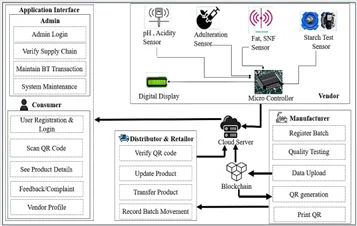
Architecture of the proposed LactoVerus: Blockchain and IoT-enabled dairy product authenticity verification system is shown in Fig. 2. It is designed to ensure end-to-end transparency and reliable consumer verification of dairy products across both organized manufacturers and automated local vendors. The system integrates IoT, blockchain, cloud, web, and unorganized vendor technologies into a unified framework that securely connects manufacturers, distributors, vendors, and automated testing units through trusted data exchange and quality assurance mechanisms. At the manufacturer side, each dairy product batch undergoes quality testing using IoT-based analysers or standard laboratory equipment to measure critical parameters such as fat percentage, SNF (solid-not-fat), protein content, pH value, and the presence of adulterants like urea, starch, or detergent. After testing, the quality results are transmitted to a cloud server (such as Firebase or SQL) for secure storage, while a cryptographic hash of the test report is generated using SHA-256 and recorded on a blockchain ledger (e.g., Hyperledger or Ethereum), ensuring immutability and preventing any future tampering of quality data.
For every verified product batch, a unique and non-replicable QR code is generated containing essential details such as batch ID, production and expiry dates, blockchain transaction ID, and a verification link to the test report. This QR code is printed on the product packaging to allow consumers to authenticate the product through a simple scan. Once packaged, the verified dairy products are dispatched to distributors, whose details and transfer information are also recorded on the blockchain to maintain complete supply chain traceability. Distributors can additionally update transportation and storage conditions, such as temperature logs, ensuring quality preservation during transit. On the local vendor side, sellers of loose dairy products such as milk, curd, paneer, yogurt, and ghee are equipped with a portable IoT-based testing kit comprising sensors such as a pH sensor, fat analyser or lactometer, turbidity sensor, temperature sensor (DS18B20), conductivity sensor, and adulteration test strips for starch, urea, and detergent. This kit, powered by an ESP32 or Arduino microcontroller, collects and processes sensor readings in real time, converts raw data into meaningful quality parameters using calibration equations, and instantly displays the results on a built-in digital screen, enabling consumers to view real-time quality information directly at the point of sale without requiring a mobile application or QR code.
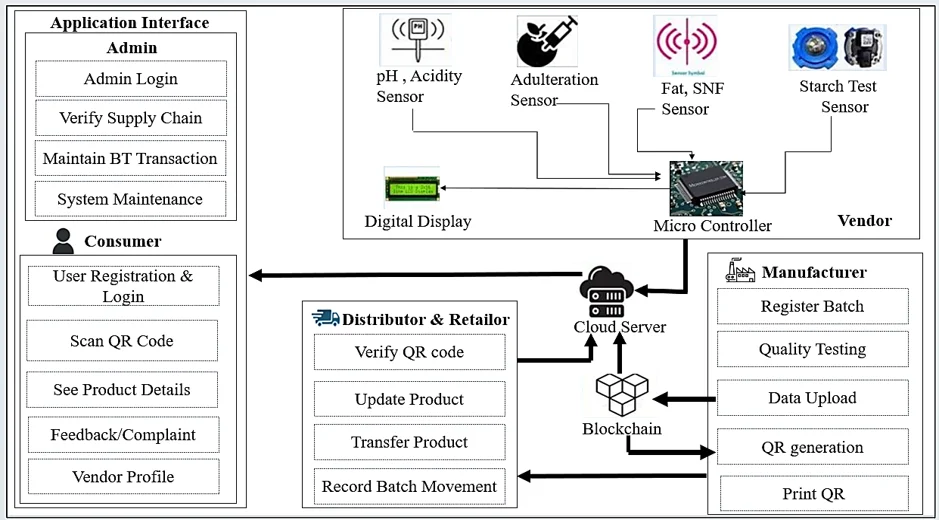
Fig. 2: Architecture of proposed LactoVerus: Blockchain and IoT-enabled dairy product authenticity verification system.
Supporting the entire ecosystem is a unified web and mobile application layer that enables seamless interaction among all stakeholders. The web interface allows manufacturers and distributors to upload and manage product batch details, monitor blockchain transaction logs, view quality verification records, and generate QR codes, while the Android application empowers consumers to scan QR codes on packaged dairy products, retrieve verified batch information from the cloud, confirm authenticity through blockchain-backed data, view origin and expiry details, and provide feedback or report issues. Through this integrated architecture, LactoVerus delivers transparent, tamper-proof, and consumer-centric dairy product authentication, fostering trust, accountability, and quality assurance across the complete dairy supply chain.
3.1 Implementation
The proposed “LactoVerus” aims to provide a technologically integrated solution for ensuring the authenticity, purity, and organic quality of dairy products across both organized (manufacturer) and unorganized (local vendor) sectors of the dairy supply chain. This study addresses major challenges in the food industry, including milk adulteration and the lack of consumer trust, by combining the capabilities of the Internet of Things (IoT) for real-time quality analysis and blockchain technology for transparent and tamper-proof record keeping. The system also includes an Android mobile application that enables end users to instantly verify the authenticity and quality of the dairy products they consume.
3.2 Technologies Used
The study was designed to develop a unified digital ecosystem that connects manufacturers, distributors, vendors, and consumers through a transparent and verifiable quality tracking mechanism. The study integrates advanced technologies within a multi-layered architecture to ensure efficiency, scalability, and reliability across all operational levels. Table 1 summarizes the Implementation stages and technologies used the proposed LactoVerus system.
Table 1: Implementation Stages and Technologies Used in the Proposed LactoVerus System
| Sr. No. | Stage | Process Description | Technology Used |
|---|---|---|---|
| 1 | Quality Testing | Sensors analyze product parameters (Fat %, SNF, pH, adulterants). | IoT Sensors, Microcontroller |
| 2 | Data Collection & Processing | Analog sensor readings are digitized and processed for accuracy. | ESP32, Arduino IDE |
| 3 | Data Storage | Test results are stored in real time on a cloud platform. | Firebase / SQL Database |
| 4 | Blockchain Recording | Cloud data is hashed and recorded on a blockchain ledger. | Ethereum / Hyperledger |
| 5 | QR Code Generation | Encodes the batch ID and blockchain reference for packaged products. | ZXing Library |
| 6 | Consumer Verification | Users scan the QR code or view the IoT kit display to verify quality. | Android App / Display Screen |
3.3 Testing and evaluation
Testing is a crucial phase to ensure that the proposed dairy product quality monitoring system functions accurately, reliably, and securely. The system is evaluated using unit testing and integration testing to validate both individual components and their interaction.
3.3.1 Unit testing: Unit testing is performed to verify the functionality of individual modules independently.
- 1) Sensor Module Testing: All sensors provided stable and accurate readings within acceptable tolerance limits.
- 2) Data Acquisition Unit Testing: Analog sensor signals were converted into digital values using the microcontroller ADC. Sampling rate, accuracy, and calibration logic were verified to ensure correct data acquisition.
- 3) Cloud Database Testing: The cloud database successfully stored and retrieved real-time sensor data.
- 4) Blockchain Module Testing: The system-generated data hashes were validated and securely stored on the blockchain ledger. Immutability and transaction verification were success fully tested.
- 5) QR Code Generation Testing: QR codes were generated for each dairy product batch containing the blockchain reference. Readability and decoding accuracy were tested using multiple mobile devices.
3.3.2 Integration testing:Integration testing ensures smooth interaction between all system modules.
- 1) Sensor to Microcontroller Integration: Sensors were interfaced with the IoT controller, and real-time data trans mission was verified under normal and fault conditions.
- 2) Microcontroller to Cloud Integration: Sensor data was transmitted to the cloud platform using Wi-Fi connectivity. Network failure and reconnection scenarios were also tested.
- 3) Cloud to Blockchain Integration: Cloud-stored data was hashed and recorded on the blockchain network. Transaction confirmations were verified successfully.
- 4) QR Code to Consumer Verification Integration: QR codes were scanned using a mobile application to retrieve blockchain data and display product quality information to consumers.
4. Results and Discussion
4.1 Results
Table 2 represents the quality analysis of different milk samples based on parameters like pH, TDS, and turbidity. It helps identify whether the milk is good, adulterated, or spoiled (chemically or naturally) using measured values.
Table 2: Results After Testing
| Sr. No. | Product Name | pH Value | TDS | Turbidity | Result |
|---|---|---|---|---|---|
| 1 | Fresh Milk | 6.7 | 150 | 4.5 | Good Milk |
| 2 | Boiled Milk | 6.6 | 155 | 4.8 | Good Milk |
| 3 | Packaged Milk | 6.5 | 160 | 4.6 | Good Milk |
| 4 | Diluted Milk | 7.2 | 95 | 1.8 | Adulterated |
| 5 | Urea Mixed Milk | 8.1 | 380 | 1.5 | Chemically Spoiled |
| 6 | Stored Milk (2 days) | 5.6 | 210 | 8.8 | Naturally Spoiled |
4.2 Discussion
The review of various dairy quality assurance systems reveals that the integration of Blockchain and IoT introduces a significant transformation in transparency, traceability, and data reliability within the dairy industry. Traditional dairy monitoring systems primarily relied on manual record keeping, laboratory-based analysis, and centralized supervision, which often resulted in delays, limited accessibility, and vulnerability to data manipulation. In contrast, IoT-enabled systems facilitate real-time and automated data acquisition, allowing critical quality parameters such as fat content, pH value, SNF, and temperature to be monitored directly through sensors with minimal human intervention. Blockchain technology further strengthens this framework by storing quality records in a decentralized and tamper-proof ledger, thereby ensuring data integrity and authenticity throughout the dairy supply chain. The combined Blockchain-IoT architecture significantly improves traceability by enabling producers, distributors, retailers, and consumers to access verified records regarding product origin, quality status, and handling conditions. The integration of Blockchain with an Android-based consumer application enhances user participation by allowing consumers to scan QR codes linked to immutable Blockchain records for instant verification of product purity and organic certification. This transparency not only minimizes the risks of adulteration and fraudulent labelling but also improves consumer confidence and trust in dairy products. Additionally, the implementation of Blockchain smart contracts can automate verification procedures, reduce administrative complexity, and improve the efficiency of certification and compliance workflows. Despite these advantages, several practical challenges remain in implementing Blockchain-IoT-based dairy verification systems on a large scale. High initial deployment costs, sensor calibration requirements, maintenance complexity, and dependence on continuous internet connectivity may limit adoption, especially in rural and small-scale dairy environments. Furthermore, interoperability issues among different Blockchain platforms and IoT devices highlight the need for technical standardization and regulatory support. Addressing these limitations through government initiatives, open-source development frameworks, affordable IoT hardware, and scalable cloud infrastructure can accelerate the adoption of intelligent dairy verification systems and promote a more transparent, secure, and sustainable dairy supply chain ecosystem.
4.3 Future Scope
Future research and development in dairy traceability systems should focus on improving scalability, intelligence, and sustainability through advanced technological integration. This includes the adoption of hybrid Blockchain models that combine public and private chains to balance transparency with data privacy. The implementation of AI-based self-calibrating IoT modules can further enhance detection accuracy and system reliability. Additionally, the development of digital twins for dairy farm environments can enable real-time simulation, monitoring, and optimization of production processes. Privacy-preserving techniques such as federated learning may also be explored to support collaborative adulteration detection without sharing raw data. Sustainable innovations, including solar-powered IoT modules, can facilitate deployment in rural and resource-constrained areas. Furthermore, achieving cross-chain interoperability among multiple Blockchain platforms will be essential for seamless data exchange and unified traceability across diverse dairy supply chain networks.
5 Conclusion
The integration of Blockchain and IoT technologies has transformed dairy product purity and authenticity verification by enabling real-time monitoring, secure data management, and traceability across the supply chain. Traditional methods such as manual testing, RFID tracking, and centralized databases often suffer from limitations including delayed results, data manipulation, and restricted accessibility for consumers and vendors. In contrast, IoT sensors continuously capture important quality parameters such as fat content, pH, temperature, and adulteration indicators, while Blockchain technology ensures that the collected information remains tamper-proof, transparent, and verifiable. This integration enhances consumer trust and strengthens accountability throughout the dairy supply chain. Overall, Blockchain-IoT based systems provide a scalable, secure, and efficient solution for ensuring dairy product purity and authenticity. By digitally connecting all stakeholders, from farmers to consumers, these systems minimize manual errors and improve transparency, quality assurance, and public health protection. Furthermore, their adaptability for both organized and unorganized dairy markets demonstrate significant potential for building a sustainable, transparent, and consumer-centric dairy ecosystem, setting a new benchmark for food safety and traceability in the modern agricultural industry.
Funding Declaration
This research did not receive any specific grant from funding agencies in the public, commercial, or not-for-profit sectors.
Data Availability Statement
Data sharing not applicable to this article as no datasets were generated or analysed during the current study.
Conflict of Interest
There is no conflict of interest.
Artificial Intelligence (AI) Use Disclosure
The authors confirm that no artificial intelligence (AI)-assisted technologies were used in the writing of the manuscript, and no images were generated or manipulated using AI. AI-based tools were used solely for language editing to improve grammar, clarity, and readability, in accordance with journal policy. The authors take full responsibility for the accuracy, originality, and integrity of the work.
Supporting Information
Not applicable.
References
- [1] A. Muehlhoff, A. Bennett, D. McMahon, Milk and Dairy Products in Human Nutrition, Food and Agriculture Organization (FAO), Rome, Italy, 2013.
- [2] A. Poonia, A. Jha, R. Sharma, H. B. Singh, A. K. Rai, N. Sharma, Detection of adulteration in milk: A review, International Journal of Dairy Technology, 2017, 70, 23–42, doi: 10.1111/1471-0307.12274.
- [3] A. David, C. Ganeshkumar, J. G. Sankar, Blockchain and artificial intelligence in food industry: Case analysis of Ripe.Io firm, International Conference on Information Management & Machine Intelligence (ICIMMI), 2023, 1–10, doi: 10.1145/3647444.3652477.
- [4] L. Sabila, L. Dwiyono, A. Hakim, A. Karuana, D. Hakika, IoT-Based Monitoring System for Temperature and pH Control in Cocoa Fermentation, MOTIVECTION: Journal of Mechanical, Electrical and Industrial Engineering, 2025, 7, 1–12, doi: 10.46574/motivection.v7i1.381.
- [5] N. Kumar, K. Kumar, A. Aeron, F. Verre, Blockchain technology in supply chain management: Innovations, applications, and challenges, Telematics and Informatics Reports, 2025, 18, 100204, doi: 10.1016/j.teler.2025.100204.
- [6] W. Jiang, C. Liu, W. Liu, L. Zheng, Advancements in Intelligent Sensing Technologies for Food Safety Detection, Research, 2025, 8, 0713, doi: 10.34133/research.0713.
- [7] P. Balakrishnan, A. Anny Leema, N. Jothiaruna, P. J. Assudani, K. Sankar, M. B. Kulkarni, M. Bhaiyya, Artificial intelligence for food safety: From predictive models to real-world safeguards, Trends in Food Science & Technology, 2025, 163, 105153, doi: 10.1016/j.tifs.2025.105153.
- [8] I. Fernando, J. Fei, S. Cahoon, D. C. Close, A review of the emerging technologies and systems to mitigate food fraud in supply chains, Critical Reviews in Food Science and Nutrition, 2025, 65, 5108–5135, doi: 10.1080/10408398.2024.2405840.
- [9] P. Devi, K. Subburamu, V. A. Giridhari, B. Dananjeyan, T. Maruthamuthu, Integration of AI based tools in dairy quality control: Enhancing pathogen detection efficiency, Food Measure, 2025, 19, 4427–4438, doi: 10.1007/s11694-025-03269-8.
- [10] A. K. Yadav, M. Gattupalli, K. Dashora, V. Kumar, Key milk adulterants in India and their Detection techniques: A Review, Food Analytical Methods, 2023, 16, 499–514, doi: 10.1007/s12161-022-02427-8.
- [11] B. S. Acharya, S. Nair, A. A. Abdul Salam, Quality analysis and detection of adulterants and contaminations in milk/milk powder by raman spectroscopy, Comprehensive Reviews in Food Science and Food Safety, 2026, 25, e70403, doi: 10.1111/1541-4337.70403.
- [12] M. Aqeel, A. Sohaib, M. Iqbal, S. S. Ullah, Milk adulteration identification using hyperspectral imaging and machine learning, Journal of Dairy Science, 2025, 108, 1301–1314, doi: 10.3168/jds.2024-25635.
- [13] B. Iraguha, J. P. M. Mpatswenumugabo, M. N. Gasana, E. Åsbjer, Mitigating antibiotic misuse in dairy farming systems and milk value chain market: Insights into practices, factors, and farmers education in Nyabihu district, Rwanda, One Health, 2024, 9, 100843, doi: 10.1016/j.onehlt.2024.100843.
- [14] T. Qu, Application of non-linear fingerprint mathematical model in dairy product quality inspection, IEEE Access, 2024, 12, 184350–184365, doi: 10.1109/ACCESS.2024.3510715.
- [15] J. Devasagayam, C. A. Leclerc, R. Bosma, L. Wood, C. M. Collier, Lock-in amplifier dairy sensor for detection of ciprofloxacin, IEEE Access, 2023, 11, 41697–41707, doi: 10.1109/ACCESS.2023.3270136.
- [16] N. Sowmya, V. Ponnusamy, Development of spectroscopic sensor system for an IoT application of adulteration Identification on milk using machine learning, IEEE Access, 2021, 9, 53979–53995, doi: 10.1109/ACCESS.2021.3070558.
- [17] P. P. Lal, A. A. Prakash, A. A. Chand, K. A. Prasad, U. Mehta, M. H. Assaf, F. S. Mani, K. A. Mamun, IoT integrated fuzzy classification analysis for detecting adulterants in cow milk, Sensing and Bio-Sensing Research, 2022, 36, 100486, doi: 10.1016/j.sbsr.2022.100486.
- [18] S. Nukapeyi, R. Bommala, D. S. Kondreddy, C. Amalakanti, C. Ravi, T. A. Konuri, Milk Chain with ML and blockchain for ensuring milk purity in dairy industry, 2024 2nd World Conference on Communication & Computing (WCONF), 2024, 1–7, doi: 10.1109/WCONF61366.2024.10692146.
- [19] A. Sharma, M. Yadav, N. Kumar, G. Chandu, R. Jana, P. Pandey, R. Kumar, Rapid detection of milk adulteration using AI-driven portable colorimetric spectroscopy, Discover Food, 2026, 6, 118, doi: 10.1007/s44187-026-00855-7.
Publisher Note
The views, statements, and data in all publications solely belong to the authors and contributors. GR Scholastic is not responsible for any injury resulting from the ideas, methods, or products mentioned. GR Scholastic remains neutral regarding jurisdictional claims in published maps and institutional affiliations.
Open Access
This article is licensed under a Creative Commons Attribution-NonCommercial 4.0 International License, which permits the non-commercial use, sharing, adaptation, distribution and reproduction in any medium or format, as long as appropriate credit to the original author(s) and the source is given by providing a link to the Creative Commons License and changes need to be indicated if there are any. The images or other third-party material in this article are included in the article's Creative Commons License, unless indicated otherwise in a credit line to the material. If material is not included in the article's Creative Commons License and your intended use is not permitted by statutory regulation or exceeds the permitted use, you will need to obtain permission directly from the copyright holder. To view a copy of this License, visit: https://creativecommons.org/licenses/by-nc/4.0/
© The Author(s) 2026